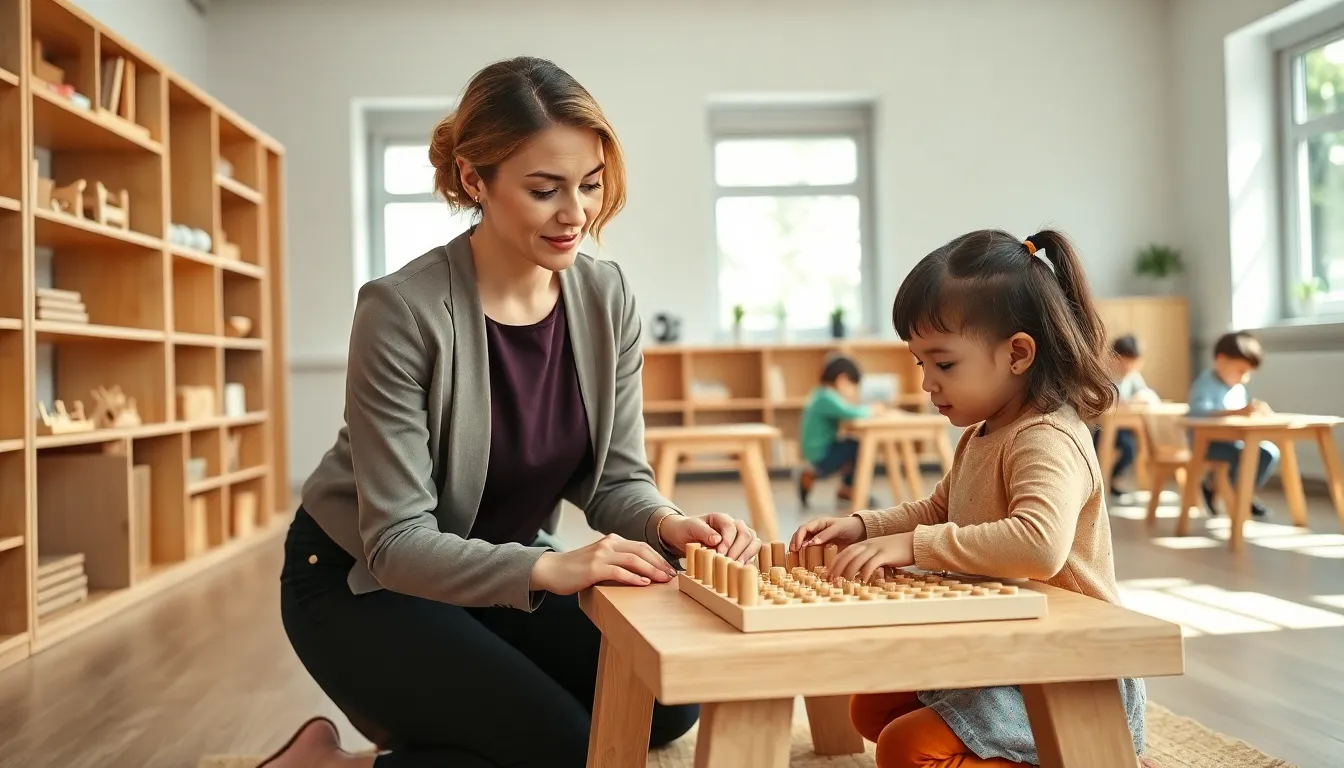
A Montessori guide plays a central role in shaping how children learn, grow, and develop independence. Unlike traditional classroom settings, Montessori education places the child at the center of their learning journey. The adult in the room serves as a guide rather than a lecturer. This approach has gained popularity worldwide, with thousands of Montessori schools now operating across the United States alone.
Understanding what a Montessori guide does, and why this role matters, helps parents make informed decisions about their child’s education. This article breaks down the key principles of Montessori education, explains how a Montessori guide differs from a traditional teacher, and offers practical advice for choosing the right program.
Table of Contents
ToggleKey Takeaways
- A Montessori guide facilitates learning by observing each child and introducing activities matched to their developmental needs, rather than lecturing to the whole class.
- Guides must complete specialized training through accredited organizations like AMI or AMS to properly prepare environments and support individualized learning.
- Unlike traditional teachers, a Montessori guide uses observation-based assessment and encourages children to develop internal motivation instead of relying on tests and external rewards.
- Research shows Montessori-guided education builds independence, self-regulation, and strong academic outcomes in reading, math, and executive function.
- When choosing a Montessori program, verify teacher credentials, look for mixed-age classrooms, and ensure uninterrupted work periods of two to three hours.
- Visit the classroom to observe how the Montessori guide interacts with children and whether the environment supports self-directed, hands-on learning.
What Is a Montessori Guide?
A Montessori guide is an adult who facilitates learning in a Montessori classroom. Dr. Maria Montessori, the founder of this educational approach, chose the term “guide” deliberately. She believed adults should lead children toward knowledge rather than deliver information through lectures.
The Montessori guide observes each child closely. They watch for signs of interest, readiness, and developmental stages. Based on these observations, the guide introduces materials and activities that match the child’s current needs. This differs sharply from a one-size-fits-all curriculum.
Guides complete specialized training through accredited Montessori programs. Organizations like the Association Montessori Internationale (AMI) and the American Montessori Society (AMS) certify teachers who have completed rigorous coursework and practicum hours. This training teaches guides how to prepare the classroom environment, present materials correctly, and support each child’s individual path.
A Montessori guide also models behavior. They demonstrate respect, patience, and curiosity. Children learn by watching their guide interact with materials, solve problems, and communicate with others. The guide sets the tone for the entire classroom community.
Core Principles of Montessori Education
Montessori education rests on several foundational principles that shape how a Montessori guide approaches their work.
Respect for the Child
Montessori philosophy treats children as capable individuals. A Montessori guide speaks to children with the same respect they would offer an adult. This respect extends to allowing children to make choices about their work and learn from natural consequences.
The Prepared Environment
The classroom itself serves as a teaching tool. A Montessori guide carefully arranges materials on low, accessible shelves. Everything has a purpose and a place. Children move freely within this space, selecting activities that interest them. The environment encourages independence and self-directed learning.
Mixed-Age Groupings
Montessori classrooms typically group children in three-year age spans. A Montessori guide works with these mixed-age groups so younger children learn from older peers, and older children reinforce their knowledge by teaching concepts they’ve mastered.
Hands-On Learning
Montessori materials are designed for tactile exploration. A Montessori guide introduces these materials through brief, precise demonstrations. Children then work with the materials independently, learning through touch and movement. Abstract concepts become concrete through physical manipulation.
Following the Child
Perhaps the most important principle: the Montessori guide follows the child’s lead. Rather than imposing a fixed schedule, the guide observes what captures each child’s attention and builds on that natural curiosity.
How Montessori Guides Differ From Traditional Teachers
The differences between a Montessori guide and a traditional teacher are significant.
Traditional teachers typically stand at the front of a classroom. They deliver lessons to the entire group at once. Students listen, take notes, and complete assigned work. The teacher controls the pace and content.
A Montessori guide works differently. They spend most of their time moving around the classroom, observing and offering one-on-one or small-group lessons. The guide rarely addresses the whole class simultaneously. Instead, they meet children where they are developmentally.
Assessment also looks different. Traditional teachers often rely on tests and grades. A Montessori guide uses observation-based assessment. They track each child’s progress through detailed notes and portfolios of work. This approach captures growth without the pressure of standardized testing.
The relationship dynamic shifts too. A Montessori guide sees themselves as a partner in the child’s education, not an authority figure dispensing knowledge. Children are encouraged to ask questions, explore independently, and take ownership of their learning.
Classroom management styles also diverge. Traditional classrooms often use external rewards and punishments. A Montessori guide helps children develop internal motivation. They guide children toward understanding why certain behaviors matter rather than simply enforcing rules.
Benefits of Montessori-Guided Learning
Research supports several benefits associated with Montessori-guided education.
Independence and Self-Regulation
Children in Montessori programs often develop strong independence skills. Because a Montessori guide encourages self-directed activity, children learn to manage their time, make decisions, and solve problems without constant adult intervention.
Love of Learning
When children choose their own work, they stay engaged. A Montessori guide nurtures intrinsic motivation by connecting learning to genuine interest. Studies have shown that Montessori students often maintain curiosity and enthusiasm for learning longer than peers in traditional settings.
Social-Emotional Development
Mixed-age classrooms create natural opportunities for mentorship and cooperation. A Montessori guide facilitates conflict resolution and helps children develop empathy. These social skills transfer to relationships outside school.
Academic Outcomes
Several studies indicate that Montessori students perform as well as or better than traditionally educated peers on standardized measures. A 2017 study published in Frontiers in Psychology found that children in Montessori programs showed greater gains in reading, math, and executive function.
Creativity and Critical Thinking
Because a Montessori guide doesn’t dictate every step, children learn to think independently. They experiment, make mistakes, and discover solutions on their own. This process builds creative problem-solving abilities.
How to Choose a Quality Montessori Program
Not all schools using the “Montessori” name follow authentic practices. The term isn’t trademarked, so anyone can use it. Here’s how to identify a genuine program with well-trained Montessori guide staff.
Check Teacher Credentials
Ask whether the Montessori guide holds certification from AMI, AMS, or another recognized organization. Training programs vary in quality, and accredited credentials matter.
Observe the Classroom
Visit during a work cycle. Watch how the Montessori guide interacts with children. Are they observing and offering individual lessons? Do children move freely and choose their own activities? Does the environment look orderly and purposeful?
Look for Mixed-Age Groups
Authentic Montessori programs group children in three-year spans. Single-age classrooms suggest a departure from Montessori principles.
Ask About the Daily Schedule
A genuine Montessori program offers uninterrupted work periods of at least two to three hours. This allows children to engage deeply with materials. Frequent transitions and short activity blocks indicate a less authentic approach.
Evaluate the Materials
Classic Montessori materials, like the pink tower, moveable alphabet, and golden beads, should be present and well-maintained. A Montessori guide uses these specific tools because they’re designed to support developmental stages.
Trust Your Observations
Watch the children. Are they focused, calm, and engaged? Do they seem comfortable approaching their Montessori guide? The atmosphere should feel peaceful and purposeful.