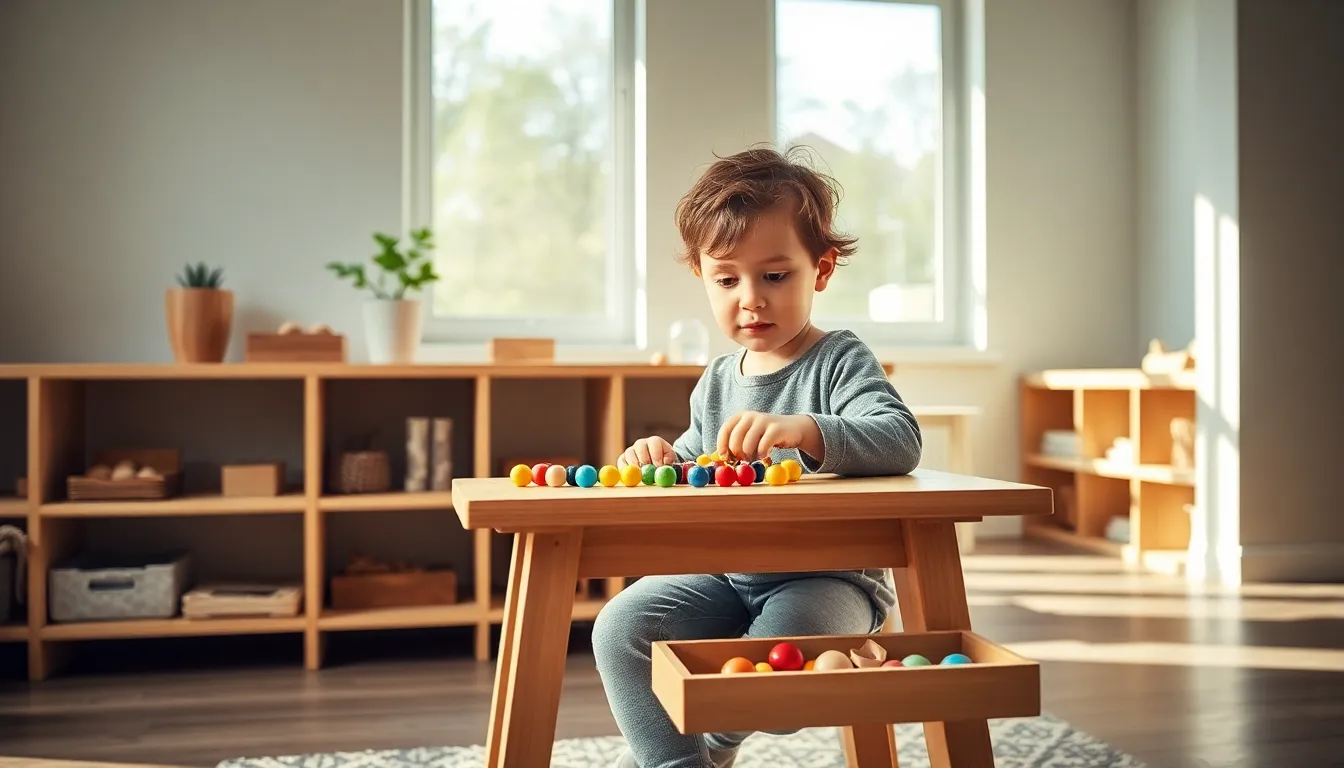
Montessori ideas offer parents a proven approach to raising curious, capable children. This educational philosophy encourages kids to learn at their own pace through hands-on exploration and self-directed activities. While Montessori classrooms have existed for over a century, these same principles work beautifully at home. Parents don’t need expensive materials or teaching degrees to carry out Montessori ideas effectively. A few intentional changes to the home environment and daily routines can spark a child’s natural love of learning. This guide covers practical ways to bring Montessori principles into any household.
Table of Contents
ToggleKey Takeaways
- Montessori ideas let children lead their own learning through hands-on exploration and self-directed activities.
- You don’t need expensive materials—everyday household items like pitchers, socks, and kitchen tools work perfectly for Montessori activities.
- Create an accessible environment with low shelves, child-sized furniture, and fewer toys to encourage independence and deeper engagement.
- Match activities to your child’s developmental stage, from pouring and sorting for toddlers to cooking and budgeting for older kids.
- Incorporate Montessori ideas into daily routines by letting children dress themselves, set the table, and manage simple tasks independently.
- Observe before intervening—allowing children to work through challenges builds problem-solving skills and lasting confidence.
What Makes Montessori Different
Montessori education stands apart from traditional schooling in several key ways. Dr. Maria Montessori developed this method in the early 1900s after observing how children learn best through active participation rather than passive instruction.
The core difference lies in who leads the learning process. In conventional classrooms, teachers direct every activity and students follow a fixed schedule. Montessori ideas flip this dynamic. Children choose their own work from a prepared environment while adults serve as guides rather than lecturers.
Another distinction involves mixed-age groupings. Montessori classrooms typically combine children spanning three years in age. Younger kids learn from older peers, while older children reinforce their knowledge by teaching concepts to others.
The materials themselves also differ significantly. Montessori ideas emphasize concrete, hands-on learning tools. A child learning math might use wooden beads to physically count and group quantities before ever seeing abstract numbers on paper. This tactile approach helps concepts stick.
Perhaps most importantly, Montessori respects each child’s developmental timeline. There’s no pressure to master reading by a specific age or complete worksheets at the same pace as classmates. Kids naturally gravitate toward activities that match their current interests and abilities.
Simple Montessori Activities for Different Ages
Implementing Montessori ideas doesn’t require fancy equipment. Many effective activities use everyday household items. The key is matching tasks to a child’s developmental stage.
For Toddlers and Preschoolers
Young children crave practical life skills. They want to do what adults do, and Montessori ideas embrace this impulse.
Pouring activities develop fine motor control and concentration. Set up a tray with two small pitchers and let children practice transferring water or dry beans between them. Spills happen. That’s part of learning.
Food preparation works wonderfully for this age group. Toddlers can wash vegetables, tear lettuce for salads, or spread butter on bread with a child-safe knife. These Montessori ideas build independence while contributing to real family meals.
Matching and sorting games sharpen cognitive skills. Gather pairs of socks for matching practice, or provide buttons of different sizes and colors for sorting exercises. Children naturally love finding patterns and organizing objects.
Sensory bins filled with rice, sand, or dried pasta invite open-ended exploration. Hide small objects for children to discover, building vocabulary as they name their finds.
For Elementary-Age Children
Older kids benefit from Montessori ideas that expand their responsibilities and intellectual challenges.
Real cooking projects suit this age perfectly. Children can follow simple recipes, measure ingredients, and operate kitchen tools with supervision. They’re practicing math, reading comprehension, and sequencing skills simultaneously.
Nature studies align with Montessori principles beautifully. Kids might maintain a nature journal, identify local plants and birds, or care for a small garden plot. These activities connect academic learning to the real world.
Money management introduces practical math concepts. Give children a small allowance to budget, or involve them in comparing prices during grocery shopping. They’ll grasp addition, subtraction, and percentages through meaningful context.
Research projects on topics of personal interest encourage self-directed learning. If a child becomes fascinated with dinosaurs or space exploration, Montessori ideas support deep dives into those subjects rather than surface-level coverage.
Setting Up a Montessori-Inspired Environment
The physical space matters enormously in Montessori philosophy. An intentionally prepared environment invites children to act independently.
Accessibility comes first. Store toys, books, and materials on low shelves where children can reach them without adult help. This simple change communicates trust and encourages self-sufficiency.
Montessori ideas favor quality over quantity. Rather than overflowing toy bins, select a limited number of purposeful items and rotate them periodically. Fewer choices reduce overwhelm and promote deeper engagement with each activity.
Child-sized furniture empowers kids to manage their own space. A small table and chair for art projects, a step stool in the bathroom, and hooks at kid-height for coats all support independence.
Organization systems should make sense to children. Use picture labels on bins so pre-readers know where items belong. Clear containers let kids see contents at a glance. When cleanup feels manageable, children do it willingly.
Beauty matters too. Montessori ideas include bringing natural elements indoors, plants, wooden materials, soft lighting. Children respond to peaceful, aesthetically pleasing spaces with calmer behavior and longer attention spans.
Create designated areas for different activities. A reading nook with comfortable seating, a art corner with accessible supplies, and a practical life station with real tools each signal different types of work and play.
Incorporating Montessori Principles Into Daily Routines
Montessori ideas extend beyond dedicated activity time. They can shape how families approach everyday moments.
Morning routines offer perfect practice opportunities. Lay out clothes the night before in an accessible spot so children can dress themselves. Use visual checklists showing the morning sequence: bathroom, breakfast, teeth, shoes. Kids feel competent when they manage these tasks independently.
Mealtimes become learning experiences through Montessori ideas. Children can set their own place at the table, pour their own drinks, and serve themselves appropriate portions. They learn to assess hunger, practice motor skills, and contribute to family rituals.
Slowing down proves essential. Montessori ideas require patience from adults. When a three-year-old insists on buttoning their own coat, it takes longer than doing it for them. But those extra minutes build capability and confidence that pay dividends later.
Allow natural consequences whenever safe. A child who forgets their jacket feels cold. One who refuses lunch feels hungry before snack time. These experiences teach cause and effect more effectively than lectures.
Limit screen time in favor of hands-on engagement. Montessori ideas emphasize concrete experiences over passive consumption. Real blocks teach physics better than building games on tablets.
Finally, observe before intervening. Watch children as they work through challenges. That moment of struggle before success builds problem-solving muscles. Step in only when frustration truly overwhelms, offering the minimum help needed to move forward.