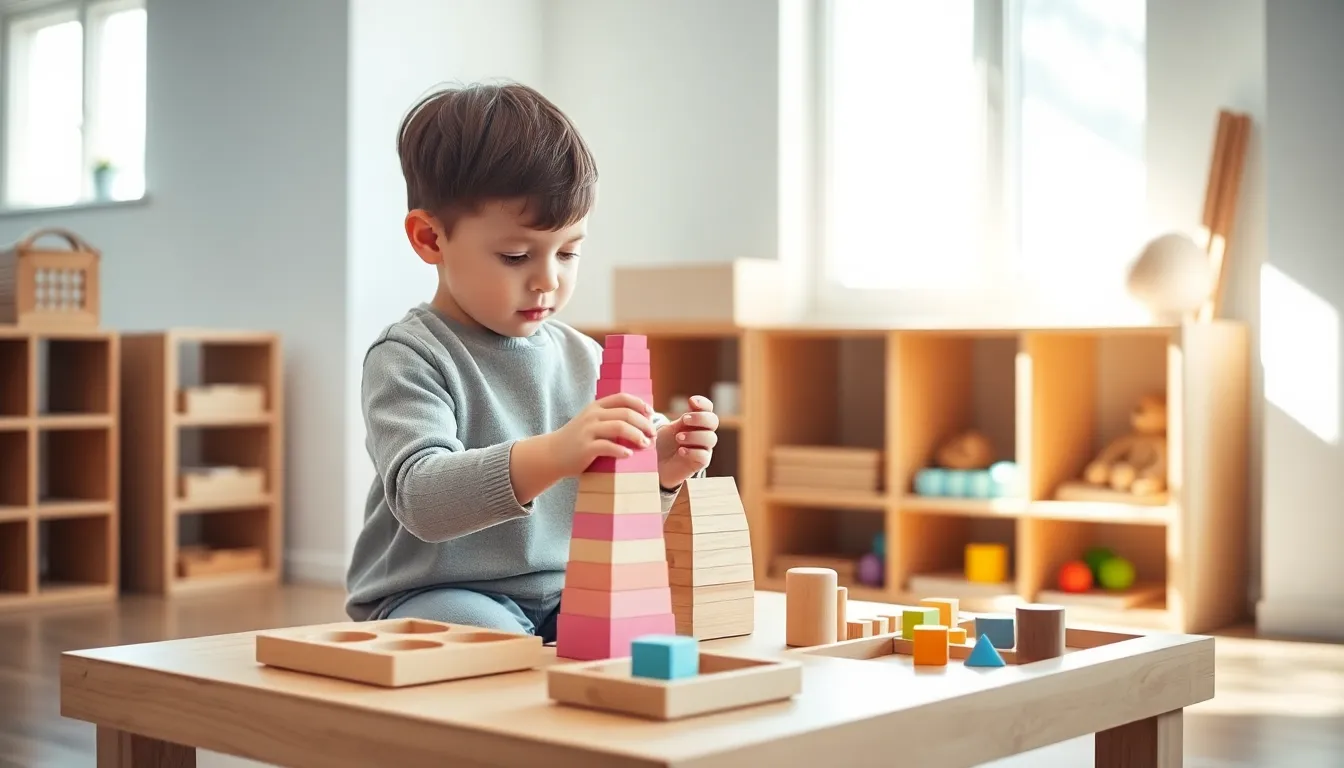
Montessori tools form the foundation of a child-led educational approach that has shaped early learning for over a century. These carefully designed materials help children develop skills through hands-on exploration and self-directed discovery. Unlike traditional toys, Montessori tools serve specific developmental purposes. They isolate concepts, encourage independence, and allow children to learn at their own pace. Whether parents are setting up a home learning space or educators are stocking a classroom, understanding these essential materials makes all the difference. This guide covers what Montessori tools are, how they’re categorized, and how to select and use them effectively.
Table of Contents
ToggleKey Takeaways
- Montessori tools are self-correcting, hands-on materials made from natural substances that teach one concept at a time.
- The five core categories of Montessori tools—practical life, sensorial, language, mathematics, and cultural studies—address specific developmental needs.
- Quality matters more than quantity when selecting Montessori tools; choose materials based on the child’s interests and developmental readiness, not age.
- Set up Montessori tools on low, open shelves with only 5–6 options at a time to prevent overwhelm and encourage independence.
- Allow children to discover mistakes naturally through the materials’ self-correcting design rather than intervening immediately.
- Budget-friendly Montessori tools like pitchers, clothespins, and spooning trays can be sourced from everyday household items.
What Are Montessori Tools?
Montessori tools are educational materials designed to support hands-on, self-directed learning. Dr. Maria Montessori developed these tools in the early 1900s after observing how children naturally learn through touch and exploration.
Each Montessori tool has a specific purpose. The materials teach one concept at a time, a principle called “isolation of difficulty.” This design allows children to focus on mastering a single skill before moving to the next challenge.
Montessori tools share several key characteristics:
- Self-correcting design: Children can identify and fix their own mistakes without adult intervention
- Natural materials: Wood, metal, glass, and fabric replace plastic whenever possible
- Real-world proportions: Items are child-sized but functional, not toy versions
- Sequential complexity: Tools progress from simple to advanced within each skill area
These materials differ from conventional educational toys in important ways. Traditional toys often flash lights, make sounds, and do most of the “work” for children. Montessori tools require the child’s active participation. A wooden puzzle doesn’t beep when completed correctly, the child must observe whether the pieces fit.
This hands-on approach builds concentration, problem-solving skills, and internal motivation. Children learn to trust their own judgment rather than waiting for external validation.
Core Categories of Montessori Materials
Montessori tools fall into five main categories: practical life, sensorial, language, mathematics, and cultural studies. Each category addresses specific developmental needs. The two foundational categories, practical life and sensorial, deserve special attention because they form the basis for all other learning.
Practical Life Tools
Practical life Montessori tools help children master everyday activities. These materials build fine motor skills, concentration, and independence through real tasks.
Common practical life tools include:
- Pouring sets: Pitchers and containers for transferring water or dry goods
- Dressing frames: Boards with buttons, zippers, snaps, or laces for practicing clothing skills
- Cleaning supplies: Child-sized brooms, dustpans, and spray bottles
- Food preparation tools: Small knives, cutting boards, and peelers for safe kitchen work
- Care of self items: Mirrors, combs, and hand-washing stations
These Montessori tools may seem simple, but they serve critical purposes. A child who can button their own shirt gains confidence. A child who can pour water develops the hand control needed for writing later.
Practical life activities also teach sequence and order. Children learn that tasks have a beginning, middle, and end. They discover that putting materials away is part of completing any activity.
Sensorial Materials
Sensorial Montessori tools refine children’s perception through sight, sound, touch, taste, and smell. These materials help children organize sensory information they’ve already absorbed from their environment.
Key sensorial tools include:
- Pink Tower: Ten graduated pink cubes that teach size discrimination
- Brown Stair: Prisms that vary in width but maintain consistent length
- Color tablets: Boxes containing color samples for matching and grading
- Sound cylinders: Paired containers with different contents that produce varying sounds
- Geometric solids: Three-dimensional shapes children can handle and compare
- Fabric boxes: Samples of different textures for tactile discrimination
Sensorial Montessori tools prepare children for academic subjects. The Pink Tower, for instance, introduces mathematical concepts like base-ten and cube roots through physical manipulation. Color tablets develop the visual discrimination needed for reading.
These materials follow a consistent presentation method. Adults demonstrate slowly and silently, then allow children to explore independently. This approach respects children’s natural learning process.
How to Choose the Right Montessori Tools
Selecting Montessori tools requires consideration of the child’s age, developmental stage, and interests. Quality matters more than quantity, a few well-chosen materials outperform a room full of mismatched items.
Start by observing the child. What activities draw their attention? A child fascinated by pouring drinks might benefit from transfer activities. A child who sorts toys by color could be ready for sensorial materials.
Consider these factors when choosing Montessori tools:
Age appropriateness: Match materials to developmental readiness, not calendar age. A two-year-old might excel with simple transfer work while a four-year-old still needs it.
Material quality: Wood and natural materials last longer and feel better than plastic alternatives. They also model respect for the environment.
Progression potential: Choose Montessori tools that offer multiple levels of challenge. The best materials grow with the child.
Authenticity: Look for materials that follow Montessori design principles. Many products claim the Montessori label but lack proper educational design.
Avoid common purchasing mistakes. Don’t buy complete sets before knowing what the child needs. Skip flashy “Montessori-inspired” toys that add unnecessary features. Resist the urge to present too many materials at once.
Budget-conscious families can start with practical life Montessori tools from around the house. A small pitcher, a basket of clothespins, or a tray for spooning beans costs little but provides genuine learning experiences.
Using Montessori Tools at Home
Creating a Montessori environment at home doesn’t require a complete room makeover. Simple changes in organization and presentation make Montessori tools accessible and inviting.
Arrange materials on low, open shelves where children can see and reach them independently. Place each tool on a tray or in a basket to define the activity’s boundaries. Limit options to five or six materials at a time, too many choices overwhelm young learners.
Follow the standard presentation process for introducing new Montessori tools:
- Invite the child to the activity
- Demonstrate slowly, using minimal words
- Return the material to its starting position
- Allow the child to try independently
- Step back and observe without interrupting
Resist the temptation to correct mistakes immediately. Montessori tools are designed to show errors naturally. A child stacking the Pink Tower incorrectly sees the visual discrepancy without needing an adult to point it out.
Rotate materials regularly to maintain interest. When a child masters one activity, introduce the next level of challenge. Store unused Montessori tools out of sight to keep the learning space uncluttered.
Set expectations for care and cleanup. Children should return materials to their designated spots after use. This habit builds responsibility and keeps the environment orderly for the next activity.
Parents often wonder how long children should work with Montessori tools. The answer varies. Some children repeat an activity dozens of times before moving on. Others explore briefly and return later. Both patterns are normal and healthy.