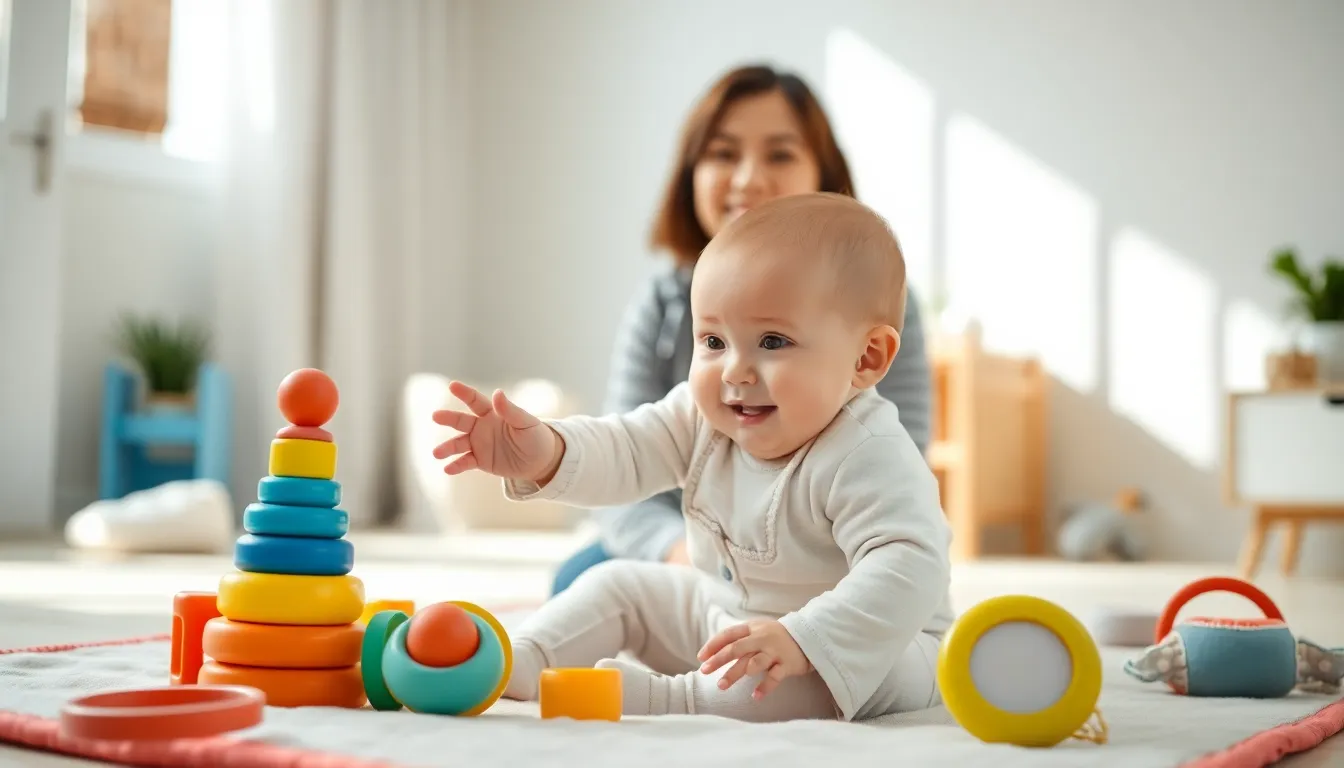
Babies examples of development offer parents and caregivers a helpful guide for understanding what to expect during the first year. Every infant grows at their own pace, but certain milestones follow predictable patterns. From the first grasp reflex to a baby’s first words, these developmental markers tell a story of rapid growth. This article covers real babies examples across physical, cognitive, social, and language development. Understanding these milestones helps caregivers support healthy growth and recognize when to seek guidance.
Table of Contents
ToggleKey Takeaways
- Babies examples of development include reflexes like rooting, grasping, and the Moro reflex, which are early indicators of healthy neurological function.
- Physical milestones progress from basic head control at 0-3 months to crawling, standing, and first steps by 12 months.
- Cognitive growth includes understanding object permanence around 4-7 months, when babies realize hidden objects still exist.
- Social smiling appears around 6-8 weeks, marking the beginning of meaningful social interaction between babies and caregivers.
- Language development starts with crying and cooing, evolving into babbling by 4-6 months and first words between 10-14 months.
- Responsive caregiving during infancy builds trust and secure attachment, creating a foundation for lifelong emotional health.
Newborn Reflexes and Early Behaviors
Newborns arrive with built-in reflexes that serve important survival functions. These early behaviors are some of the first babies examples parents observe.
The rooting reflex causes babies to turn their heads toward touch on their cheeks. This reflex helps them find the breast or bottle for feeding. Stroke a newborn’s cheek, and they’ll turn and open their mouth.
The Moro reflex (or startle reflex) appears when babies hear loud sounds or feel sudden movement. They throw their arms out, arch their backs, then pull their arms in. This reflex typically fades by 3-4 months.
Grasping is another common reflex. Place a finger in a newborn’s palm, and they’ll grip tightly. This grip can be surprisingly strong.
Other babies examples of reflexes include:
- Stepping reflex: Hold a baby upright with feet touching a surface, and they make stepping motions
- Sucking reflex: Babies automatically suck when something touches the roof of their mouth
- Tonic neck reflex: When the head turns to one side, the arm on that side extends
These reflexes gradually disappear as voluntary movements develop. Doctors check these reflexes during well-baby visits to assess neurological development.
Examples of Physical Development in the First Year
Physical development moves fast during the first twelve months. Babies examples of motor milestones follow a general sequence, though timing varies.
0-3 Months
During the first three months, babies develop basic head control. They lift their heads briefly during tummy time. Their movements are jerky and uncoordinated. By 2-3 months, many babies can hold their heads steady when supported.
4-6 Months
This period brings exciting changes. Babies examples at this stage include:
- Rolling from tummy to back (around 4 months)
- Sitting with support (5-6 months)
- Reaching for and grasping objects
- Transferring toys between hands
- Putting things in their mouths
Muscle strength increases significantly. Babies push up on their arms during tummy time and may start rocking on hands and knees.
7-9 Months
Sitting without support becomes stable. Many babies begin crawling, though some scoot or roll to get around. Pulling up to stand while holding furniture often starts around 8-9 months.
10-12 Months
The end of the first year brings major mobility advances. Babies examples include cruising along furniture, standing briefly without support, and taking first steps. Fine motor skills improve too, babies use a pincer grasp to pick up small items between thumb and forefinger.
Remember: these are general guidelines. Some babies skip crawling entirely. Others walk earlier or later than average. Both are normal.
Cognitive and Sensory Milestones
Brain development during infancy is remarkable. Babies examples of cognitive growth show how quickly they learn to understand the world.
Object permanence develops around 4-7 months. Before this, babies think an object that disappears is gone forever. After this milestone, they know hidden objects still exist. That’s why peek-a-boo becomes exciting, babies anticipate the reveal.
Cause and effect understanding emerges around 4-6 months. Babies learn that their actions create results. Shake a rattle, it makes noise. Push a button, a toy plays music. This discovery leads to lots of repetition as babies test their power over objects.
Sensory development progresses rapidly:
- Vision: Newborns see best at 8-12 inches. By 3 months, they track moving objects. Color vision matures by 4 months.
- Hearing: Babies recognize familiar voices from birth. They turn toward sounds by 3-4 months.
- Touch: Babies explore textures with hands and mouths throughout the first year.
Other babies examples of cognitive skills include:
- Recognizing familiar faces (2-3 months)
- Showing curiosity about new objects (4-6 months)
- Looking for dropped items (6-8 months)
- Understanding simple words like “no” (8-10 months)
- Imitating gestures and sounds (9-12 months)
These milestones show babies actively processing information and building mental models of how things work.
Social and Emotional Development Examples
Social-emotional growth during infancy creates the foundation for relationships throughout life. These babies examples show how infants connect with others.
Social smiling appears around 6-8 weeks. Before this, smiles are reflexive. True social smiles respond to faces and voices. This milestone marks the beginning of real social interaction.
Stranger anxiety typically develops between 6-12 months. Babies who once smiled at everyone may now cry when unfamiliar people approach. This behavior shows healthy attachment to caregivers.
Separation anxiety often peaks around 8-14 months. Babies become distressed when parents leave. This challenging phase actually signals secure attachment and growing memory.
Babies examples of emotional development include:
- Laughing out loud (3-4 months)
- Showing preference for familiar people (4-6 months)
- Displaying clear emotions like joy, fear, and frustration (6-9 months)
- Seeking comfort from caregivers when upset (6-12 months)
- Showing affection through hugs and kisses (9-12 months)
Self-soothing behaviors develop gradually. Some babies suck their thumbs. Others hold a special blanket or toy. These comfort strategies help babies manage emotions.
Responsive caregiving matters enormously during this period. When caregivers consistently respond to babies’ needs, infants develop trust and secure attachment. This security becomes the base for emotional health later in life.
Communication and Language Examples
Language development starts long before babies speak their first words. Babies examples of communication evolve throughout the first year.
Pre-Verbal Communication (0-6 Months)
Newborns communicate through crying. Different cries signal hunger, discomfort, or fatigue. Parents learn to decode these signals over time.
By 2-3 months, babies add cooing, soft vowel sounds like “ooh” and “aah.” They respond to voices and may “talk back” in conversation-like exchanges.
Around 4-6 months, babbling begins. Babies produce consonant-vowel combinations like “ba-ba” or “da-da.” This vocal play exercises the muscles needed for speech.
Language Foundations (6-12 Months)
Babbling becomes more varied and speech-like. Babies examples at this stage include:
- Using different sounds and tones
- Imitating speech rhythms
- Responding to their own name
- Understanding simple words and phrases
- Pointing to communicate interest
First words typically appear between 10-14 months. “Mama,” “dada,” “ball,” and “no” are common early vocabulary. Babies understand many more words than they can say.
Gestures play a big role in early communication. Waving bye-bye, raising arms to be picked up, and shaking the head “no” all communicate meaning before verbal language catches up.
Parents can support language development by talking to babies frequently, reading aloud, and responding to babies’ communication attempts. These interactions build vocabulary and conversational skills.