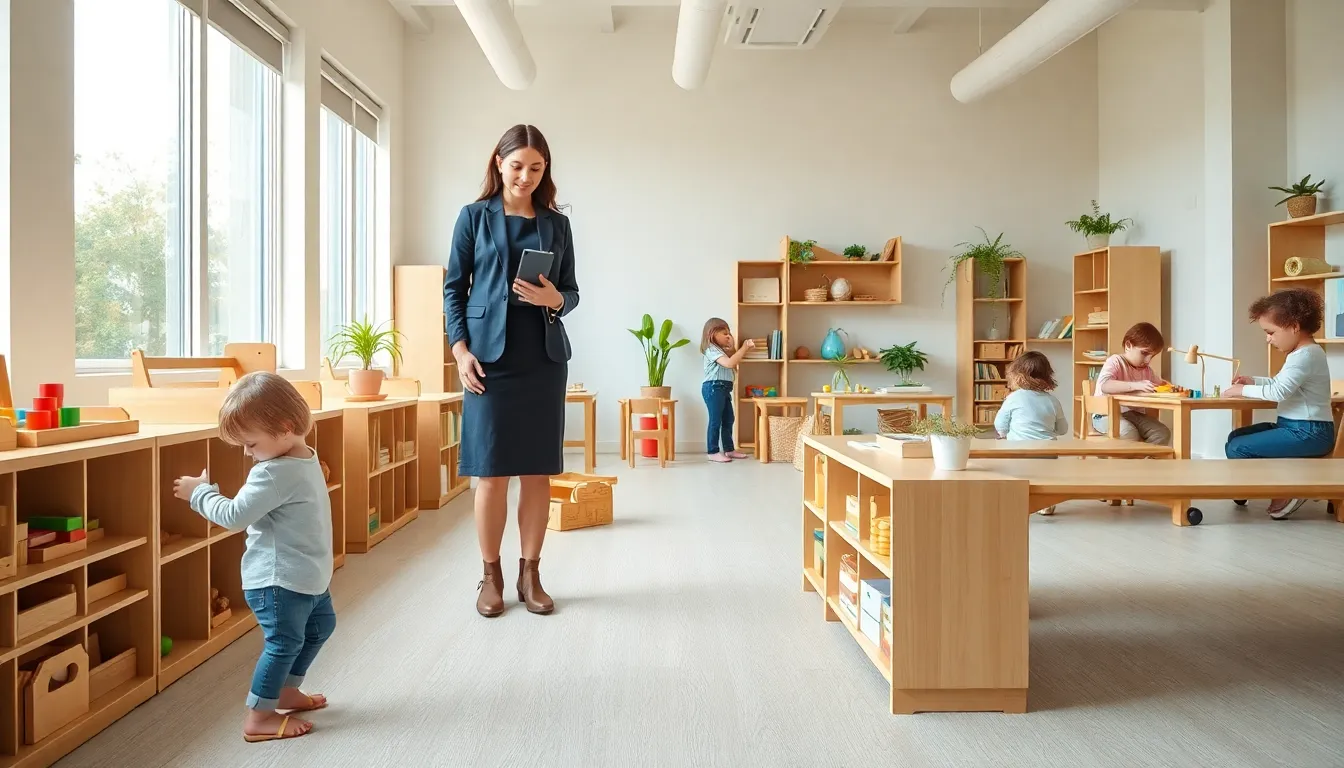
Finding a top Montessori school requires more than a quick Google search. Parents want programs that honor Maria Montessori’s original philosophy while preparing children for modern life. The best Montessori schools share common traits: trained teachers, mixed-age classrooms, and child-led learning environments.
This guide breaks down what separates excellent Montessori programs from average ones. It covers accreditation standards, age-appropriate program levels, and the questions parents should ask during school visits. Whether a family is exploring Montessori for a toddler or an elementary student, these insights will help them make an well-informed choice.
Table of Contents
ToggleKey Takeaways
- A top Montessori school features trained teachers, mixed-age classrooms, and child-led learning environments that honor Maria Montessori’s original philosophy.
- Always observe a classroom in action—look for children working independently, calm atmospheres, and authentic Montessori materials in good condition.
- Accreditation from AMS (American Montessori Society) or AMI (Association Montessori Internationale) signals a school’s commitment to authentic Montessori practices.
- Top Montessori programs protect uninterrupted work periods of two to three hours, allowing children to engage deeply with materials.
- Ask about teacher credentials—qualified Montessori educators complete 9-12 months of training from accredited programs, not weekend workshops.
- Montessori education spans infancy through high school, with each program level addressing specific developmental needs through hands-on, purposeful learning.
What Makes a Montessori Program Stand Out
A top Montessori program does more than display wooden toys and low shelves. It creates an environment where children direct their own learning within a carefully prepared space.
Child-Centered Learning
In authentic Montessori classrooms, children choose their activities. A three-year-old might spend an hour with the pink tower while a classmate works on pouring exercises. Teachers observe and guide rather than lecture. This approach builds concentration, independence, and intrinsic motivation.
The Prepared Environment
Every item in a Montessori classroom serves a purpose. Materials sit on accessible shelves at child height. Each activity has a specific place. Children learn to return items after use, developing order and responsibility. The best programs invest in quality Montessori materials, not cheap imitations.
Mixed-Age Classrooms
Top Montessori schools group children in three-year age spans. A primary classroom includes ages three through six. Younger children learn from older peers. Older children reinforce their knowledge by teaching concepts they’ve mastered. This structure mirrors real-world social dynamics better than same-age groupings.
Uninterrupted Work Periods
Authentic Montessori programs protect extended work periods, typically two to three hours. Children need time to engage deeply with materials. Programs that interrupt work for frequent transitions or scheduled activities miss a core Montessori principle.
Key Factors to Consider When Choosing a Montessori School
Not every school with “Montessori” in its name follows authentic practices. The term isn’t trademarked, so anyone can use it. Parents need clear criteria to evaluate their options.
Classroom Observation
The best indicator of quality is watching a classroom in action. During a visit, parents should look for:
- Children working independently or in small groups
- A calm, focused atmosphere
- Teachers moving quietly among students
- Mixed-age groupings
- Authentic Montessori materials in good condition
Red flags include teacher-led group instruction, children sitting at desks in rows, and excessive noise or chaos.
Teacher-to-Student Ratios
Top Montessori programs maintain appropriate ratios. Primary classrooms (ages 3-6) typically have 20-28 children with one lead teacher and one assistant. Infant and toddler programs require smaller ratios, often 1:4 or 1:5.
Parent Communication
Strong Montessori schools keep parents informed without disrupting the child’s school experience. They offer regular conferences, parent education nights, and clear communication channels. Some programs provide observation opportunities so parents can see their children at work.
Schedule and Logistics
Practical matters count too. Consider location, hours, and extended care options. Many Montessori programs offer half-day options for younger children and full-day programs for older students. Transportation, lunch policies, and summer programs vary by school.
Age Groups and Program Levels in Montessori Education
Montessori education spans from infancy through high school. Each level addresses specific developmental needs.
Infant and Toddler Programs (Birth to Age 3)
Montessori infant programs focus on movement, language development, and trust. Toddler classrooms introduce practical life activities like dressing, washing hands, and simple food preparation. Top Montessori programs at this level emphasize freedom of movement and respect for each child’s pace.
Primary/Children’s House (Ages 3-6)
This is the most common Montessori program level. Children work with materials covering five areas: practical life, sensorial, language, mathematics, and cultural subjects. A child typically stays in the same classroom for three years. The third year, often called the “kindergarten year,” is when children consolidate their learning and take on leadership roles.
Lower Elementary (Ages 6-9)
Elementary Montessori shifts toward group work and abstract thinking. Students explore “Great Lessons” that cover the origins of the universe, life, language, and mathematics. Research projects replace some hands-on materials. Top Montessori elementary programs encourage students to follow their interests deeply.
Upper Elementary (Ages 9-12)
Older elementary students take on more complex projects and community involvement. They develop time management skills and prepare for adolescence. Many Montessori schools end at age 12, though middle school and high school programs exist in some areas.
Montessori Middle and High School
Adolescent Montessori programs are less standardized but share common elements: real-world work experiences, community service, and student-directed learning. These programs remain relatively rare compared to early childhood options.
How to Evaluate Montessori Accreditation and Teacher Training
Accreditation and teacher credentials separate top Montessori schools from programs using the name without the substance.
Recognized Accrediting Bodies
Two main organizations accredit Montessori schools in the United States:
- American Montessori Society (AMS): The largest Montessori organization in the U.S. AMS accredits schools and certifies teacher training programs.
- Association Montessori Internationale (AMI): Founded by Maria Montessori herself. AMI maintains strict adherence to original Montessori methods.
Both organizations set high standards. Schools accredited by either body have demonstrated commitment to authentic Montessori practice.
Teacher Training Requirements
A top Montessori school employs teachers with credentials from recognized training programs. Full Montessori teacher training takes 9-12 months of academic study plus supervised practice teaching. Weekend workshops or online-only certificates don’t provide adequate preparation.
During school visits, parents should ask:
- Where did the lead teacher complete Montessori training?
- Is the training program accredited by AMS, AMI, or MACTE (Montessori Accreditation Council for Teacher Education)?
- How many years of Montessori classroom experience does the teacher have?
Questions About School Accreditation
Beyond teacher credentials, parents should ask about school-level accreditation. Accredited schools undergo regular reviews of their classrooms, curriculum, and operations. This process ensures ongoing quality rather than a one-time achievement.
Some excellent schools aren’t yet accredited, the process takes time and resources. But they should be able to explain their philosophy, training standards, and plans for formal recognition.