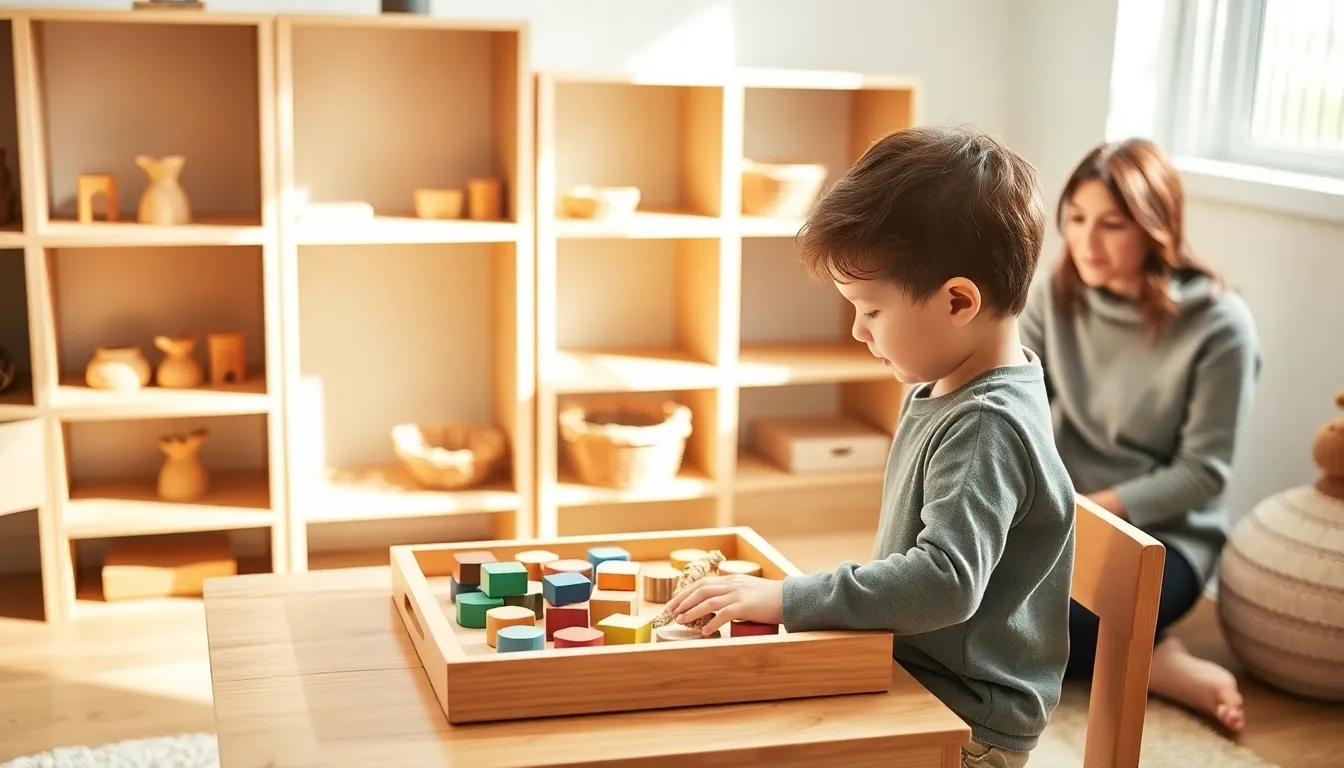
Montessori for beginners can feel overwhelming at first. Parents hear about child-led learning, prepared environments, and special materials, and wonder where to start. The good news? Getting started with Montessori doesn’t require a complete home renovation or expensive classroom supplies.
Dr. Maria Montessori developed this educational approach over a century ago. Her methods now shape thousands of schools worldwide. But Montessori isn’t just for classrooms. Parents can apply these principles at home to support their child’s natural development.
This guide breaks down the Montessori method into practical steps. It covers the core philosophy, key principles, and specific ways to bring Montessori into daily family life. Whether a parent is considering Montessori schools or simply wants to incorporate these ideas at home, this article provides a clear starting point.
Table of Contents
ToggleKey Takeaways
- Montessori for beginners doesn’t require expensive materials—start with household items like spoons, bowls, and small pitchers for practical life activities.
- Create an accessible home environment by installing low hooks, using step stools, and placing toys on open shelves children can reach independently.
- Child-led learning is central to Montessori: observe your child’s interests and let them choose activities rather than constantly directing them.
- Protect your child’s concentration by avoiding interruptions when they’re deeply engaged, even to offer praise.
- Offer limited choices (“red shirt or blue shirt?”) to respect your child’s autonomy without causing overwhelm.
- For Montessori beginners, practical life and sensorial activities provide the easiest starting point with minimal investment.
What Is the Montessori Method?
The Montessori method is an educational approach that treats children as naturally curious learners. Dr. Maria Montessori, an Italian physician, created this system in 1907. She observed that children learn best when they can choose their activities and work at their own pace.
At its core, Montessori education respects the child as an individual. Teachers (called “guides”) observe each student and offer activities that match their developmental stage. Children don’t sit at desks listening to lectures. Instead, they move freely around a prepared environment and select work that interests them.
Montessori for beginners often starts with understanding one key idea: children have an innate drive to learn. A toddler doesn’t need rewards to practice walking. They do it because development is built into human nature. Montessori applies this same principle to academic and practical skills.
The classroom, or home environment, plays a crucial role. Montessori spaces feature child-sized furniture, accessible shelves, and carefully selected materials. Everything has a specific place. This order helps children feel secure and develop independence.
Montessori education spans from infancy through high school. But, most programs focus on early childhood (ages 3-6). During these years, children experience what Montessori called “sensitive periods”, windows when they absorb specific skills like language, order, and movement with remarkable ease.
One common misconception: Montessori isn’t unstructured chaos. Children have freedom within limits. They can choose what to work on, but they must use materials properly and respect others in the space. This balance builds self-discipline alongside independence.
Core Principles of Montessori Education
Understanding Montessori for beginners requires familiarity with several foundational principles. These ideas guide both classroom practice and home application.
Child-Led Learning
Montessori trusts children to direct their own education. Adults prepare the environment and offer lessons, but children choose when and how long to work on activities. This approach builds intrinsic motivation. Children work because they’re genuinely interested, not because an adult tells them to.
Prepared Environment
The physical space matters enormously in Montessori. Environments are organized, beautiful, and sized for children. Materials sit on low shelves where kids can reach them independently. Each item has a designated spot. This predictability gives children confidence to work on their own.
Hands-On Materials
Montessori materials are designed for active, sensory learning. Children don’t just hear about math concepts, they touch, stack, and manipulate objects that make abstract ideas concrete. For example, the famous “pink tower” teaches size discrimination through direct experience with ten wooden cubes.
Mixed-Age Groupings
Traditional Montessori classrooms group children in three-year age spans (0-3, 3-6, 6-9, etc.). Younger children learn from older peers. Older children reinforce their knowledge by teaching. This structure mirrors real-world social environments better than same-age segregation.
Uninterrupted Work Periods
Montessori schedules include long blocks of uninterrupted time, typically 2-3 hours. Children need time to choose activities, settle into concentration, and complete work cycles. Constant interruptions prevent deep engagement.
Respect for the Child
This principle runs through everything. Adults speak to children respectfully. They don’t interrupt focused work unnecessarily. They trust children to make appropriate choices. Montessori for beginners often requires adults to step back and resist the urge to “help” too much.
Following the Child
Guides observe children closely and respond to their interests and developmental needs. If a child shows fascination with insects, the adult might introduce related books, activities, or outdoor explorations. Education follows the child’s lead rather than a rigid curriculum.
How to Apply Montessori at Home
Parents don’t need a certified classroom to practice Montessori. Many principles translate directly to home life. Here’s how families can start.
Create an Accessible Environment
Look at each room from a child’s height. Can they reach their clothes? Their dishes? Their toys? Montessori for beginners at home starts with physical accessibility. Install low hooks for coats. Use a step stool in the bathroom. Store toys on low, open shelves rather than in cluttered bins.
Establish Order
Give everything a home. When items have designated places, children can find what they need and put things away independently. Use baskets or trays to contain related items. Label shelves with pictures for pre-readers.
Slow Down and Observe
Watch what captures the child’s attention. What do they reach for? What activities hold their focus? These observations guide parents toward appropriate activities and materials. Resist the urge to constantly direct or entertain.
Invite Participation in Daily Tasks
Montessori calls these “practical life” activities. Let children pour their own drinks (start with a small pitcher). Include them in cooking, cleaning, and laundry. Yes, it takes longer. But children gain tremendous confidence and skill from real contributions to household life.
Offer Choices Within Limits
Instead of “What do you want to wear?” try “Would you like the red shirt or the blue shirt?” Limited choices prevent overwhelm while still respecting the child’s autonomy. This applies to snacks, activities, and daily routines.
Model Instead of Correct
When a child struggles, demonstrate the skill slowly and clearly. Don’t grab the material and “fix” it. Montessori for beginners means learning to trust the process. Children often need multiple attempts before mastering skills.
Protect Concentration
When a child is deeply engaged, don’t interrupt, even with praise. Concentration is precious. Wait until they look up naturally. This teaches children that their work matters and builds longer attention spans.
Choosing Montessori Materials and Activities
Montessori materials look simple but serve specific developmental purposes. Parents exploring Montessori for beginners should understand what makes these materials effective.
Characteristics of Good Montessori Materials
Authentic Montessori materials share several features. They isolate one concept or skill. They’re made from natural materials like wood, glass, or metal. They’re sized appropriately for small hands. And they include built-in “control of error”, children can see for themselves whether they’ve completed the work correctly.
Starting Simple
Parents don’t need to purchase expensive, certified materials immediately. Begin with activities using household items:
- Transferring beans between bowls with a spoon
- Sorting objects by color or size
- Pouring water between small pitchers
- Folding washcloths
- Threading large beads onto string
These practical life activities build fine motor skills and concentration.
Age-Appropriate Progression
Montessori for beginners means matching activities to developmental stages. Toddlers need large motor activities and simple practical life work. Preschoolers can handle more refined tasks and begin sensorial materials. Older children move toward abstract concepts using concrete materials as bridges.
Quality Over Quantity
More isn’t better in Montessori. Display only a few activities at a time. Rotate them when interest wanes. A cluttered shelf overwhelms children and discourages focused work.
Where to Purchase Materials
Several companies produce Montessori materials at various price points. Nienhuis and Gonzagarredi make premium, classroom-quality products. Companies like Alison’s Montessori and Montessori Outlet offer more affordable options for home use. Many parents also create DIY versions of classic materials.
Activities by Area
Montessori divides learning into categories:
- Practical Life: Pouring, spooning, buttoning, sweeping
- Sensorial: Pink tower, color tablets, sound cylinders
- Language: Sandpaper letters, moveable alphabet, phonics objects
- Mathematics: Number rods, spindle box, golden beads
- Culture: Maps, nature study, art, music
For Montessori beginners, practical life and sensorial activities offer the easiest entry points. They require minimal investment and naturally engage young children.