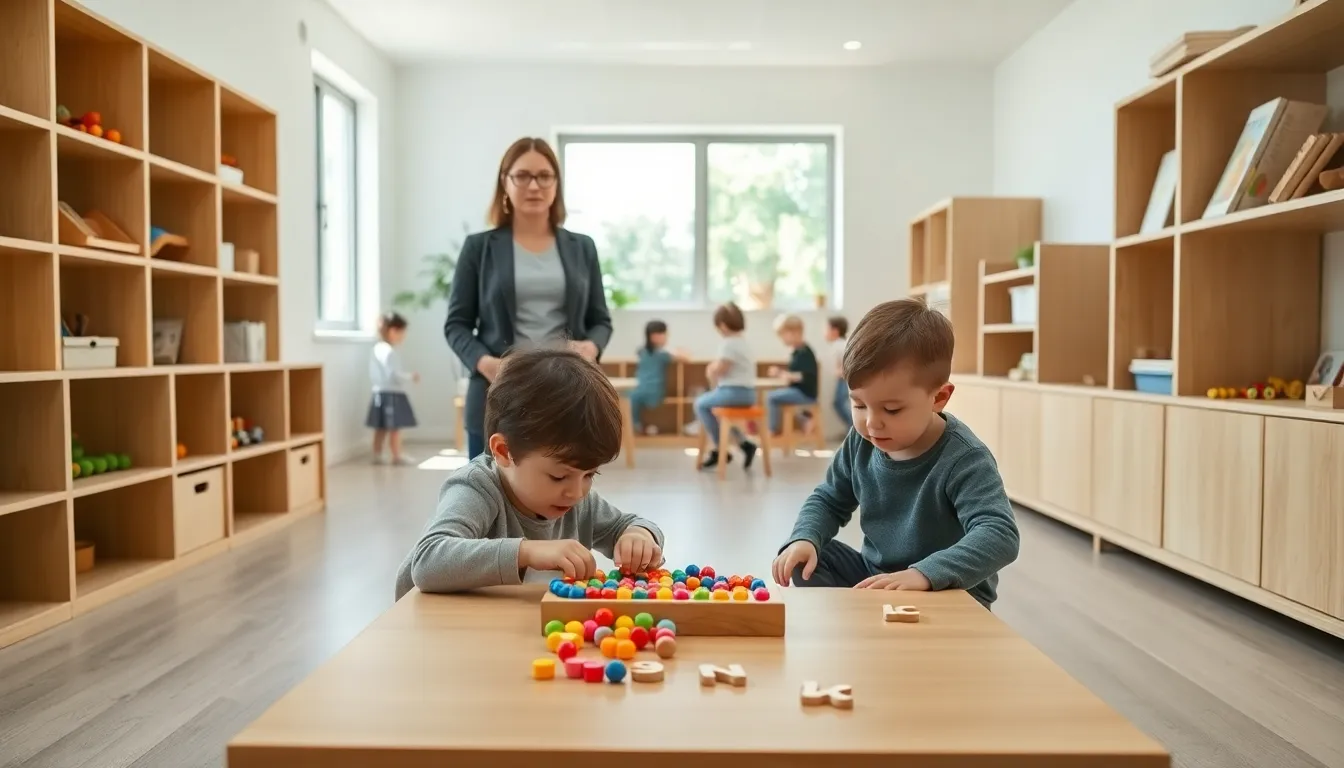
What is Montessori? It’s an educational philosophy that puts children at the center of their own learning. Developed over a century ago, the Montessori method has grown into a global movement with thousands of schools worldwide. This approach encourages children to learn at their own pace through hands-on activities and self-directed exploration. Parents often hear about Montessori education but aren’t sure what makes it different from traditional schooling. This guide breaks down the Montessori method, its history, core principles, classroom structure, and benefits, so readers can decide if it’s the right fit for their child.
Table of Contents
ToggleKey Takeaways
- Montessori is a child-centered educational philosophy developed by Dr. Maria Montessori in 1907 that emphasizes hands-on learning and self-directed exploration.
- Core Montessori principles include child-led learning, mixed-age classrooms, hands-on materials, uninterrupted work periods, and a carefully prepared environment.
- Research shows Montessori students often outperform peers in academic achievement, social skills, and executive function when the method is implemented well.
- Montessori classrooms look different from traditional schools—children work independently or in small groups across five key areas: Practical Life, Sensorial, Language, Mathematics, and Cultural Studies.
- When choosing a Montessori school, look for AMI or AMS accreditation and observe how teachers interact with students.
- Montessori works best for families who value independence, creativity, and intrinsic motivation over standardized testing benchmarks.
The Origins of the Montessori Method
The Montessori method was created by Dr. Maria Montessori, an Italian physician and educator, in the early 1900s. She opened her first classroom, Casa dei Bambini (Children’s House), in Rome in 1907. This school served children from low-income families in a poor neighborhood.
Dr. Montessori observed how children learned best when given freedom within a structured environment. She noticed that kids naturally gravitated toward activities that matched their developmental needs. These observations formed the foundation of what is Montessori education today.
Her scientific background shaped her approach. She designed special learning materials based on how children interacted with objects. She tested and refined these materials by watching how students used them. This evidence-based process set Montessori apart from other educational theories of the time.
The Montessori method spread quickly across Europe and reached the United States by 1911. Today, there are over 20,000 Montessori schools worldwide. The approach has remained largely consistent with Dr. Montessori’s original vision, though it continues to adapt to modern contexts.
Core Principles of Montessori Education
Understanding what is Montessori requires knowing its foundational principles. Several key ideas define this educational approach.
Child-Led Learning
Children choose their own activities from a range of options prepared by the teacher. This freedom allows them to follow their natural curiosity. A child interested in math might spend more time with number materials, while another might focus on language activities.
Mixed-Age Classrooms
Montessori classrooms typically group children in three-year age spans (3-6, 6-9, 9-12). Younger children learn from older peers. Older children reinforce their knowledge by teaching concepts to others. This structure mirrors real-world social dynamics.
Hands-On Materials
Montessori uses specific learning materials designed to teach abstract concepts through physical interaction. A child learns math using beads they can touch and count. They learn reading through sandpaper letters they can trace with their fingers.
Uninterrupted Work Periods
Montessori schedules include long blocks of uninterrupted time, usually two to three hours. Children can dive deep into activities without being pulled away by bells or transitions. This supports concentration and focus.
The Prepared Environment
Teachers (called guides in Montessori) carefully arrange the classroom to promote independence. Everything sits at child height. Materials are organized logically on open shelves. Children can access what they need without adult help.
What a Montessori Classroom Looks Like
Walk into a Montessori classroom, and you’ll notice immediate differences from traditional schools. There are no rows of desks facing a teacher’s board. Instead, children work at tables, on rugs, or in small groups scattered throughout the room.
The space divides into distinct areas:
- Practical Life: Activities like pouring, buttoning, and food preparation teach motor skills and self-care
- Sensorial: Materials help children refine their senses, sorting by size, weight, color, or texture
- Language: Letters, phonics materials, and writing tools support literacy development
- Mathematics: Beads, rods, and other manipulatives make abstract math concepts concrete
- Cultural Studies: Geography, science, art, and music materials round out the curriculum
You’ll see children at different stages working on different tasks. One might be washing dishes at a small sink. Another might be building numbers with golden beads. A third might be reading quietly in a corner.
Teachers don’t stand at the front lecturing. They move through the room, observing and offering individual lessons when needed. They introduce new materials to children who are ready for them. This is what Montessori looks like in practice, a busy, purposeful environment where each child works at their own level.
The atmosphere tends to be calm even though the activity. Children speak in soft voices. They return materials to shelves when finished. They learn to respect others’ work space and concentration.
Benefits of the Montessori Approach
Research supports many benefits of the Montessori method. Studies show Montessori students often outperform peers in academic achievement, social skills, and executive function.
Independence and Confidence
Children learn to make choices and solve problems on their own. They develop confidence by mastering skills through practice. A child who can prepare their own snack or complete a puzzle without help builds genuine self-esteem.
Love of Learning
Because children follow their interests, they stay engaged. Learning feels less like a chore and more like discovery. Many Montessori graduates describe themselves as lifelong learners.
Strong Academic Foundation
The Montessori curriculum covers traditional subjects but often in greater depth. Children frequently read and do math earlier than conventionally educated peers. The hands-on materials make abstract concepts easier to grasp.
Social and Emotional Skills
Mixed-age classrooms teach children to collaborate and communicate across age groups. Younger children practice patience. Older children develop leadership and empathy. Conflict resolution is built into daily classroom life.
Executive Function
Montessori develops planning, focus, and self-regulation. Children must choose activities, manage their time, and complete tasks independently. These skills transfer to academic success and life beyond school.
Not every study shows dramatic differences, and outcomes depend on implementation quality. But the overall evidence suggests what is Montessori education offers genuine developmental advantages when done well.
Is Montessori Right for Your Child?
Montessori works well for many children, but it isn’t a universal fit. Parents should consider several factors when deciding.
Your Child’s Personality
Some children thrive with the freedom Montessori provides. Others may need more structure initially. Active, curious kids often do well. Children who prefer clear instructions might take time to adjust.
Your Family’s Values
Families who value independence, creativity, and intrinsic motivation often align well with Montessori philosophy. Those who prioritize standardized testing and traditional academic benchmarks might feel tension with the approach.
The Specific School
Not all Montessori schools are equal. Look for AMI (Association Montessori Internationale) or AMS (American Montessori Society) accreditation. Visit classrooms and observe how teachers interact with students. Ask about teacher training and student-to-teacher ratios.
Long-Term Plans
Consider whether your child will stay in Montessori through elementary years or transition to traditional school. Some children adjust to conventional classrooms easily. Others find the shift challenging.
What is Montessori at its core? It’s a belief that children are capable learners who develop best when given respect, appropriate challenges, and freedom within limits. If that philosophy resonates, Montessori deserves serious consideration.